
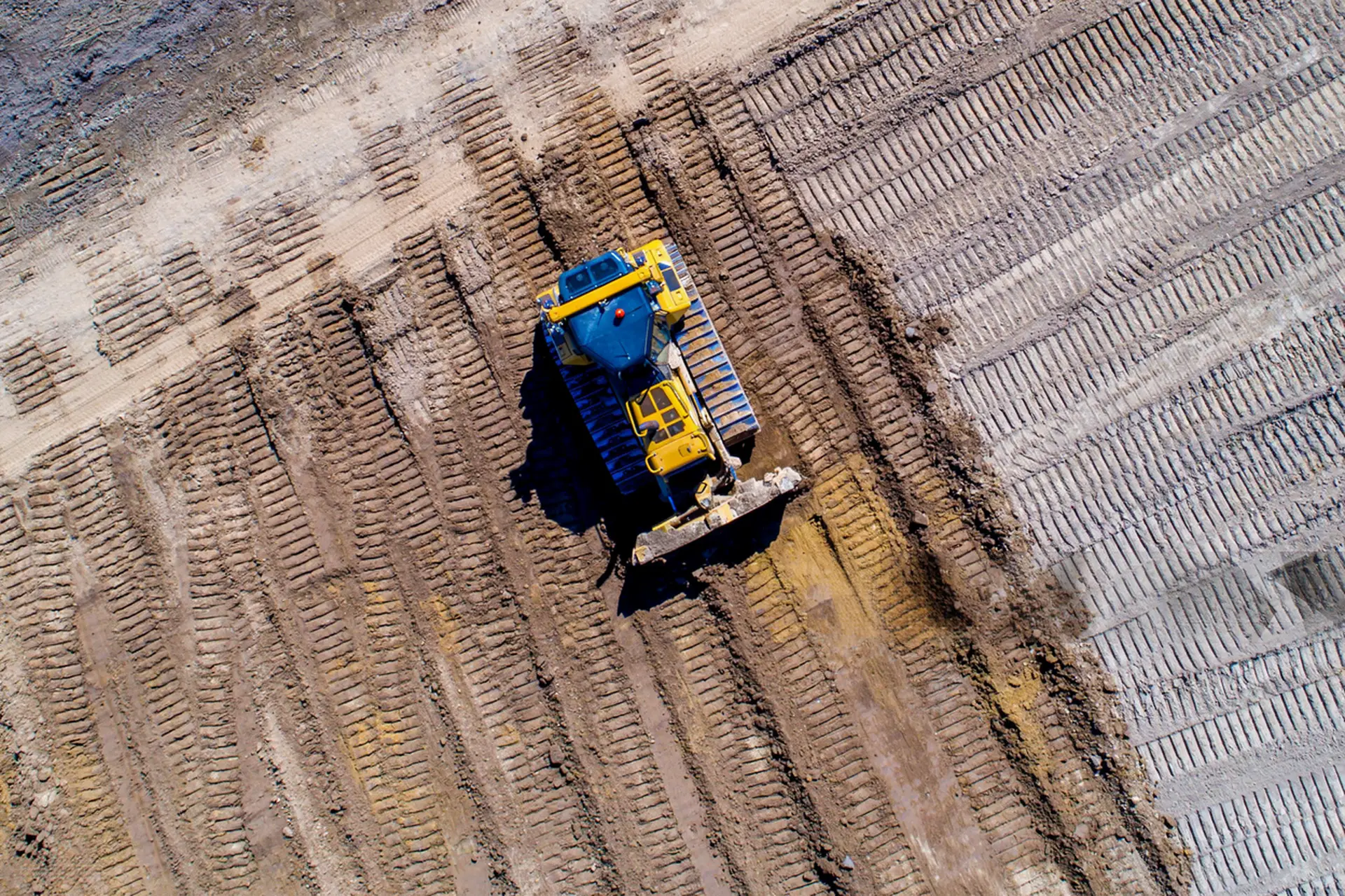
Land grading in Arizona works best when it’s done before winter rains arrive, not after. Most guides tell you spring is the ideal season. In the East Valley, winter (December through March) is actually when the region gets most of its rainfall, so a poorly graded site shows its problems fast, and a well-graded one proves its worth even faster.
What Land Grading Actually Means for Your Site
Land grading is the process of reshaping the ground’s surface to a planned slope so water moves away from buildings, driveways, and pads instead of pooling against them. It happens after excavation and before foundations, flatwork, or paving go in.
Grading isn’t one step. It’s a sequence.
Rough Grading vs. Finish Grading
Rough grading sets the general shape of a site. Crews cut high spots, fill low ones, and rough out the slopes that will carry water where it needs to go. Finish grading comes later. It brings the surface to its exact final elevation, tight enough for a foundation crew or paving contractor to build on without surprises.
Why “Winter” Means Something Different Here
Most of the country associates winter grading with frozen ground and stalled equipment. San Tan Valley, Queen Creek, Mesa, and the rest of the East Valley don’t work that way. Ground here rarely freezes, so crews can grade straight through the season. What winter does bring is rain, and that changes when grading actually needs to happen.
Did You Know? Arizona’s East Valley gets rain in two separate seasons each year: the summer monsoon (July through September) and a quieter but steadier stretch of Pacific storm systems from December through March, according to NWS Phoenix climate normals. The winter stretch is often the wetter of the two.
Why We Push Winter Grading for Commercial Sites
Here’s where most articles on this topic stop short. They’ll tell you grading controls drainage, then move on. What they won’t tell you is what actually happens when a commercial site skips that step before the rain shows up.
We’ve walked onto job sites where a pad sat ungraded through a wet winter. Water pooled against a stem wall for weeks. Soil that should have been compacted and sloped turned soft under equipment, adding days of rework before anyone could pour concrete. That’s not a hypothetical. It’s the reason we tell commercial clients to schedule grading before the first storm system rolls in, not after the ground is already saturated. This pattern shows up most on commercial builds, where site conditions and drainage needs often look different than what a residential lot requires.
What Happens When Grading Waits
A site that grades late usually pays for it twice. First in delay, because wet or unstable soil can’t be compacted properly. Second in cost, because fixing erosion or standing water after the fact almost always runs more than doing it right the first time.
Pro Tip: Ask your contractor to schedule grading by early December if your project is set to break ground that winter. That gives crews time to cut slopes and compact soil before the season’s storms arrive.
How We Sequence a Winter Job
On a typical commercial pad, we assess the site, confirm drainage direction with the civil plans, then rough grade before fine-tuning the finish elevations. Compaction testing happens along the way, not just at the end, so nothing gets buried that shouldn’t be. The same crews and machines handle the excavation services and trenching many sites need before grading starts, so scheduling stays on one timeline instead of three.
How Grading Protects a Site Before Storms Hit
Grading exists to control water. Done right, it directs runoff toward the drainage path the site was designed for instead of letting it collect where it shouldn’t.
Drainage Slopes and Water Flow
A grading plan sets specific slope percentages away from structures. Even a small mistake in that slope, less than an inch of fall over the wrong distance, can send water toward a foundation instead of away from it.
Did You Know? Much of the East Valley sits on caliche, a hardened layer of calcium carbonate that doesn’t drain the way normal soil does. When grading doesn’t account for it, water has nowhere to go but sideways, straight toward whatever sits downhill.
Erosion Control During Storm Season
Bare, ungraded slopes erode fast once winter rain starts. Proper grading, paired with compaction, keeps loose soil from washing into drainage channels, parking areas, or a neighboring property line. On steeper sites, we’ll sometimes pair grading with a boulder retaining wall to hold the soil in place through the wet season.
The Winter Grading Process: What to Expect
- Site assessment. A crew reviews soil conditions, existing drainage, and the civil grading plan.
- Rough grading. Heavy equipment cuts and fills to establish the general slope of the site.
- Compaction testing. Soil density gets checked against project specs before anything builds on top of it.
- Finish grading. Crews bring the surface to exact final elevations for paving, flatwork, or foundations.
- Final drainage check. A walk-through confirms water moves the way the plan intended before crews leave the site.
Pro Tip: Request a compaction test report once grading wraps up. It’s your proof the soil meets density specs before a foundation or paving crew builds on top of it.
Cost and Timeline for Winter Grading Projects
Grading cost depends on site size, soil condition, how much cut-and-fill is needed, and access for equipment. A small residential lot might grade out in a single day. A commercial pad, especially one needing rough and finish grading plus compaction testing, often takes several days to a week.
Winter doesn’t usually add cost on its own here. What adds cost is waiting until a site is already wet to start. If your property sits near a wash or drainage easement, check floodplain requirements with the Arizona Department of Water Resources before design work is finalized. If your project also needs underground utility work, ask about combining it with your grading timeline so crews aren’t back on site twice.
Pro Tip: If your project falls near a wash, loop in flood control requirements early. It’s far easier to adjust a grading plan on paper than after equipment is already on site.
Land grading before winter isn’t about beating a deadline. It’s about giving your site the best shot at handling the season’s rain without costly rework. Sites graded ahead of storm season hold up better, drain properly, and stay on schedule once building starts.
If you have a commercial or residential project breaking ground this winter, get your grading scheduled now, before the first storm system arrives. Contact Mirage Excavation for a free estimate and a grading timeline built around your site.
Frequently Asked Questions
What is land grading?
Land grading is reshaping a site’s surface to a planned slope so water drains away from buildings and hardscape instead of pooling against them. It happens after excavation and before foundations, flatwork, or paving.
Is winter a good time for land grading in Arizona?
Yes. Ground in the East Valley rarely freezes, and grading before the region’s winter rainy season (December through March) helps prevent drainage problems and rework once storms arrive.
How much does land grading cost?
Cost depends on site size, soil conditions, and how much cut-and-fill work is needed. A free estimate is the fastest way to get an accurate number for your property.
How long does land grading take?
A small residential lot can often be graded in a day. Larger commercial sites needing rough grading, finish grading, and compaction testing typically take several days to a week.
Do I need a permit to grade land in Arizona?
Many grading projects in Arizona require a permit, especially on commercial sites or land near a wash or floodplain. Check with your local jurisdiction or flood control district before work begins.
Related East Valley service area: Gilbert – For related local work, visit our excavation contractors in Gilbert page.